
Drainage mats
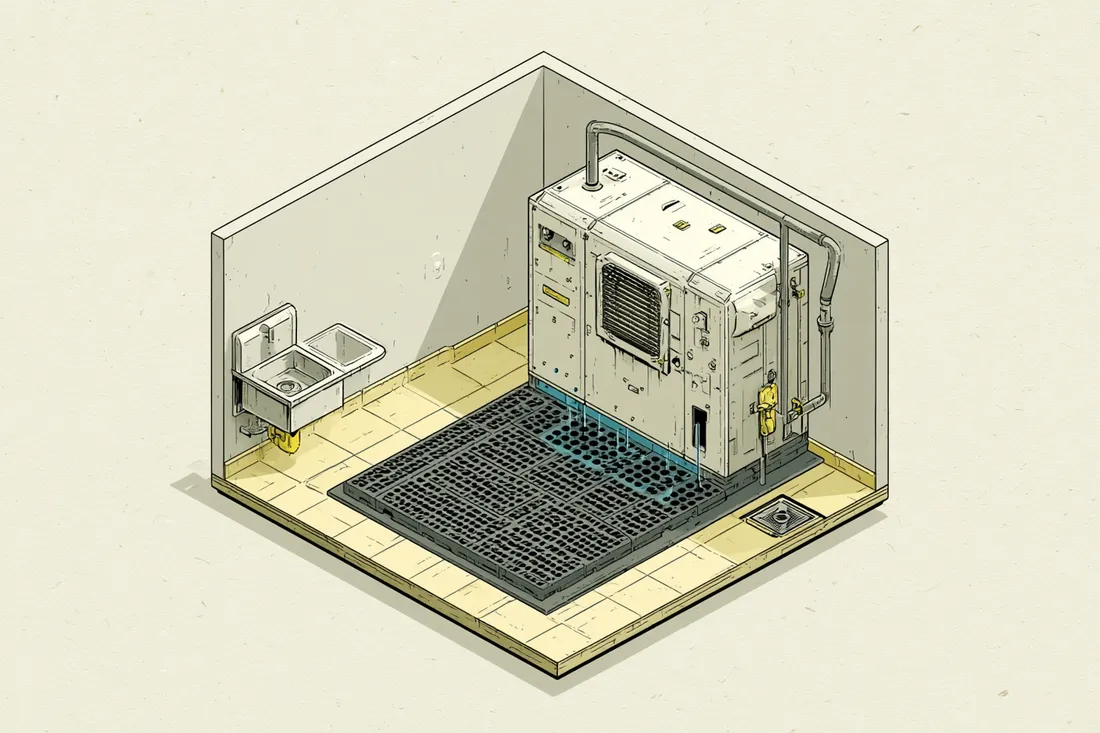
Drainage mats are for wet, greasy, washdown and chip-heavy floors, where liquids and debris need to fall below the standing surface. This page covers when flow-through beats a solid mat, the material that still has to be right, and the specs to confirm.
In short
A drainage mat is a format, not a place: flow-through holes let water, grease and debris fall below the standing surface, which helps footing on wet floors. Use it in kitchens, washdown and chip-heavy industrial zones; keep a solid mat for dry areas. The material still has to match the floor, and the mat only stays safe if it is lifted and cleaned underneath.
Drainage mat vs solid mat
The choice comes down to what is on the floor. Where water, grease, spills or debris collect, a drainage mat lets them fall through the holes and below the surface the crew stands on, which keeps footing more secure and stops liquids pooling on top. That flow-through is a genuine slip-safety measure on a wet floor, not just a comfort one.
On a dry or light-duty floor, the holes are a liability rather than a help: asolid anti-fatigue mat is cleaner, tidier and easier to keep free of grit. So the rule is simple, drainage where the floor is wet or messy, solid where it is dry.
Where drainage mats are used
Drainage matting suits any floor that stays wet, greasy or debris-heavy:commercial kitchen cook lines and prep areas, dish and pot-wash stations, beverage and bar areas, and, on theindustrial side, washdown stations and machining or chip zones where coolant and swarf need to clear the standing surface.
| Zone | Drainage requirement | Material / spec to consider |
|---|---|---|
| Kitchen cook / fry line | Sheds grease, oil and dropped food below the surface | Grease-resistant nitrile, flow-through holes, NSF listing |
| Dish / pot wash | Clears standing water fast, stays grippy when wet | Maximum drainage, non-slip surface, lift-out for cleaning |
| Beverage & bar | Drains spills and ice-melt away from underfoot | Drainage runner, slip-safe, easy daily cleaning |
| Industrial wet / washdown | Handles hose-down water and cleaning chemicals | Chemical-compatible rubber, drainage, ramp edges |
| Machining / chip areas | Lets swarf, chips and coolant fall below the standing zone | Oil-resistant nitrile, robust perforations, load rating |
Material choice still matters
Drainage is the shape; the compound is still a separate decision. Grease and oil degrade many foams and standard rubbers, so greasy and oily zones favornitrile rubber, which resists them far better. Rubber compounds vary in how they handle chemicals and heat, and a PVC foam mat is usually the wrong pick for a grease-heavy or wet industrial duty.
So specify both together: the drainage design for the debris on your floor, and a compound matched to the grease, oil or chemicals present. One without the other leaves a gap, a well-drained mat in the wrong material still breaks down.
Cleaning underneath
A drainage mat only works safely if it is lifted and the floor beneath is cleaned on a regular schedule. The whole point is that debris passes below the surface, so grease, food and grime collect under the mat, and left there they become both a hygiene problem and a slip risk when the mat is walked on.
That makes handling a real spec point. Confirm the mat lifts out easily and is not too heavy for staff to move for the nightly wash-down, and replace any mat that curls, tears or packs down flat, since a degraded drainage mat is a trip hazard as well as a hygiene one.
What to ask a supplier for
Drainage design and material have to be judged together, so a good supplier answers all of this at the product level:
- 1Grease, oil and chemical compatibility for the actual liquids on your floor
- 2The drainage hole or profile design, and how well it clears your debris (water, grease, chips)
- 3The mat weight and how it is handled and lifted for cleaning underneath
- 4Edge and ramp options so exposed sides are not a trip hazard
- 5Wet or greasy slip data where applicable, and any NSF listing for food-service products
FAQ
Drainage mats: common questions
Straight answers before you specify a wet-floor format.
Are drainage mats anti-fatigue?
Most are. Drainage is a format, and many flow-through mats also give anti-fatigue support for crews who stand a whole shift on wet floors. The holes let water, grease and debris fall below the standing surface, which helps footing, while the resilient material relieves the hard floor. Confirm both the drainage design and the anti-fatigue support for your zone.
Are drainage mats better than solid mats?
Only where the floor gets wet, greasy or debris-heavy. On those floors, drainage keeps liquids and food off the surface underfoot, which is a real slip-safety benefit. On a dry office or light-duty floor a solid mat is cleaner, easier to keep tidy and usually the better choice. Match the format to the floor conditions.
Do kitchen drainage mats need NSF certification?
NSF listing signals a product meets sanitation and cleanability criteria for food-service environments, so it is a useful thing to look for on a kitchen mat, alongside grease resistance and drainage. It is a sanitation listing, not a slip or anti-fatigue rating. Confirm the specific product carries the listing rather than assuming the whole range does.
Can drainage mats become a trip or hygiene problem?
Yes, if they are not maintained. Drainage only works safely when the mat is lifted and the floor beneath is cleaned regularly, otherwise grease and debris collect under it, which is both a hygiene and a slip issue. Choose a mat that lifts out easily, specify beveled or ramp edges, and replace any mat that curls or packs down.
Get help choosing
Need drainage matting specified for your floor?
Send us the zone, the liquids and debris on the floor, how the mats are cleaned and the area to cover. We'll match the drainage design and compound and return a neutral spec you can use with any supplier.
- No obligation
- No paid rankings
- US & Canada