
Standing Desk Mats
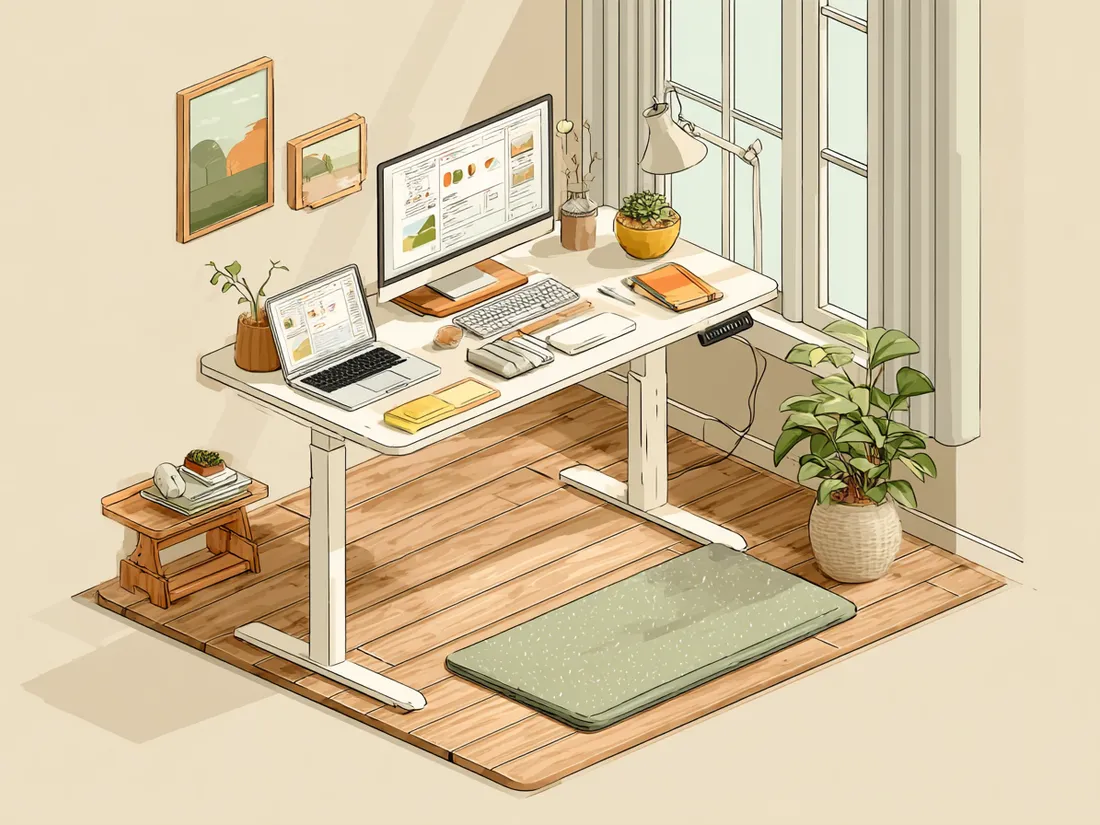
A standing desk mat is an anti-fatigue mat sized for a sit-stand workstation, where someone alternates between sitting and standing through the day. It softens the hard floor during standing spells and, in "active" designs, gives the feet things to do so you keep moving.
The office market splits into two camps: flat cushioned mats and contoured "not-flat" mats with terrain that encourages micro-movement. Below we explain the trade-off, the thickness and material choices that matter, and why non-toxic, PVC-free construction is a common office requirement.
In short
Standing desk mats are anti-fatigue mats sized for sit-stand desks; choose flat comfort or a contoured "active" mat, aim for about 1/2"-3/4" of firm polyurethane or high-density foam with beveled edges, and look for PVC-free construction in enclosed offices.
Sized for sit-stand
Compact footprints that suit a desk, so you can step off to sit without a trip edge.
Flat or "active"
Choose flat comfort or contoured terrain that prompts subtle, continuous movement.
Office-grade materials
Polyurethane or high-density foam that resists edge curl and keeps its shape.
PVC-free options
Low-odor, non-toxic construction, a common ask for home and shared offices.
Flat comfort mats vs contoured "active" mats
Flat standing mats give an even cushioned surface and a clean look, simple and effective for people who mostly want relief from a hard floor. Contoured "active" mats add raised edges, mounds or a massage feature that invite you to shift weight, stretch a calf or rock gently, turning idle standing into gentle movement, which is the behavior NIOSH links to lower standing fatigue.
Neither is universally better. If you tend to stand still, an active mat nudges you to move; if you want a low-profile surface you can roll a chair near and step off easily, a flat mat is cleaner. Both should have gently sloped edges so stepping off to sit isn’t a trip risk.
| Flat comfort mat | Contoured "active" mat | |
|---|---|---|
| Best for | Simple relief from a hard floor | People who stand still and forget to move |
| Underfoot feel | Even cushioning throughout | Terrain, edges and features to shift onto |
| Profile | Low, easy to step off | Raised areas; check the edge slope |
| Look | Minimal, tidy | More of a visible "wellness" object |
Thickness, size and materials
For a desk, a mat around 1/2" to 3/4" (about 13-19 mm) thick is a common sweet spot, enough give for comfort without feeling unstable. Polyurethane and high-density foam hold their shape and resist the edge curl that makes cheap mats a trip hazard. A footprint of roughly 20" x 32" up to 24" x 36" suits most single desks.
If the mat shares space with a rolling chair, favor a firmer, lower-profile mat you can move aside easily, or one designed to take a chair. Whatever you choose, beveled edges matter more at a desk than anywhere because you step on and off it many times a day.
Non-toxic and PVC-free construction
Home and shared offices increasingly ask for PVC-free, low-VOC mats to avoid off-gassing and odor in an enclosed room. Look for materials described as PVC-free and, where indoor air quality matters, low-emitting, some office mats carry GREENGUARD certification. See PVC-free mats for what these terms mean and what to verify with the supplier.
Ask a supplier for
Whichever brand you shortlist, request this data before you commit, a good supplier answers all of it quickly:
- 1The named material (polyurethane, EVA, TPE, gel, PVC foam) and whether it is PVC-free
- 2Thickness (1/2" to 3/4" suits most desks) and how firm it feels after months of use
- 3Emissions data or GREENGUARD certification for the specific product, for enclosed rooms
- 4Edge slope and anti-curl construction, you step on and off dozens of times a day
- 5The return window, so you can trial flat vs contoured feel at your own desk
Comparing suppliers? See how to compare anti-fatigue mat suppliers or browse our fair brand comparisons.
FAQ
Standing Desk Mats: questions
Honest answers specific to this type of matting.
Are standing desk mats worth it?
If you stand at a desk for meaningful stretches, most people find a mat noticeably more comfortable than a bare hard floor, and an active mat can nudge you to keep moving. They’re one part of using a sit-stand desk well, alternating sitting and standing and taking breaks matters just as much.
Flat or contoured, which standing mat is better?
It depends on your habits. A contoured "active" mat helps if you tend to stand rigidly still, by giving your feet terrain to shift across. A flat mat is lower-profile, tidier and easier to step off to sit. Both should have sloped edges so the mat isn’t a trip hazard at your desk.
How thick should a standing desk mat be?
Around 1/2" to 3/4" (about 13-19 mm) suits most desks, enough cushioning to feel comfortable without being so soft it feels unstable. Firmer polyurethane or high-density foam holds up better and resists edge curl over time.
What does PVC-free mean for a standing mat?
It means the mat is made without polyvinyl chloride, which some buyers avoid for indoor air quality and odor reasons in an enclosed office. PVC-free mats often use polyurethane or other foams; some also carry low-emission certifications like GREENGUARD. Ask the supplier for material and emissions data to confirm any claim.
Related guides
Go deeper before you specify
The Best Mats for Standing All Day at Work
How to pick the best mat for standing all day: standing-time guidance, thickness, edges, and the right mat by environment, with a quick comparison table.
Read guideStanding Desk Mat Brands: Flat vs Active vs Gel vs Polyurethane
A brand-neutral map of standing desk mat brands and constructions: flat foam, active terrain, gel and polyurethane, who each suits and what to check.
Read guideStanding Desk Mat vs Industrial Anti-Fatigue Mat
Standing desk mat vs industrial anti-fatigue mat: comfort and PVC-free options against nitrile durability and modular tiles, side by side.
Read guideHow to Choose Ergonomic Matting: A Buyer's Checklist
A buyer's checklist for choosing ergonomic matting: environment, standing time, thickness, durometer, edges, material and procurement.
Read guideGel vs Foam Anti-Fatigue Mats: Which Feels Better for Standing?
Gel vs foam and polyurethane anti-fatigue mats on underfoot feel, stability and compression set, and why softer isn't always better.
Read guideRubber vs Foam Anti-Fatigue Mats: Durability, Comfort and Cost
Rubber vs foam anti-fatigue mats: durability and grip against lighter comfort, so you can pick the right one for industrial floors or offices.
Read guideRelated matting
Compare nearby options
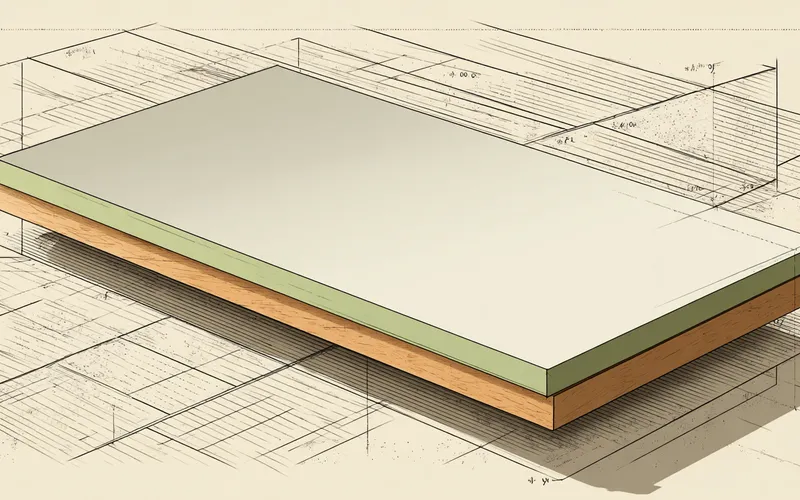
Anti-Fatigue Mats
The hub for anti-fatigue matting, cushioned floor mats that reduce the fatigue of standing on hard surfaces, chosen by workplace, standing time and environment.
Explore matting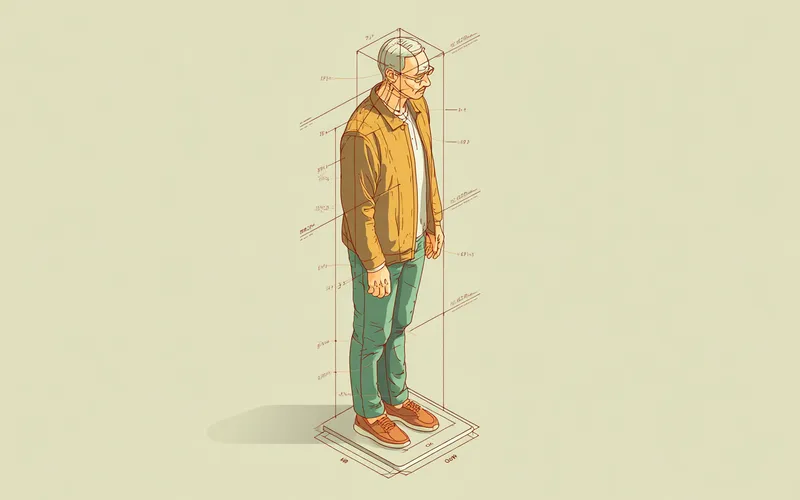
Ergonomic Floor Mats
Ergonomic floor matting framed the right way, as one part of a workstation ergonomics program, not a standalone fix for standing fatigue.
Explore matting
PVC-Free Mats
Anti-fatigue mats made without PVC, why it matters for indoor air quality, what replaces it, and how to verify low-VOC and non-toxic claims.
Explore matting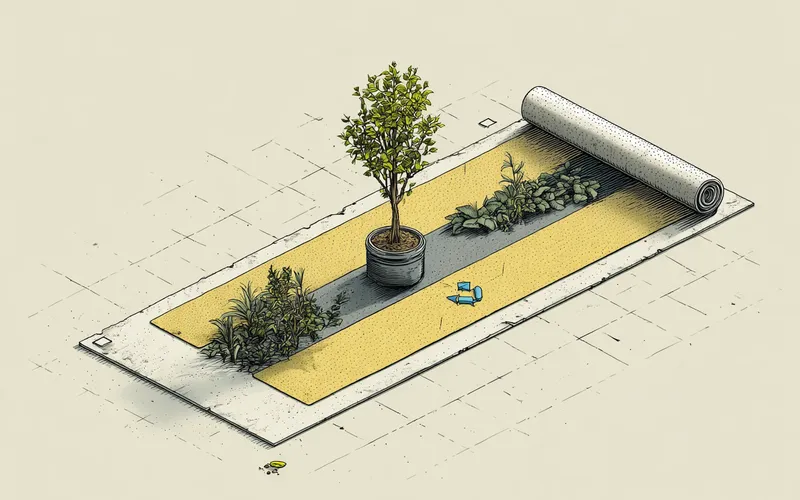
Eco-Friendly Mats
The hub for sustainable matting, recycled, PVC-free and low-VOC options explained honestly, with what to actually verify before you believe an eco claim.
Explore mattingGet help choosing
Find the right mat for your standing zone
Tell us the environment, standing hours, floor type, any wet, oil, grease or ESD condition, the approximate size or number of stations, and any sustainability requirements. We’ll return a neutral mat specification you can use with any supplier.
- No obligation
- No paid rankings
- US & Canada